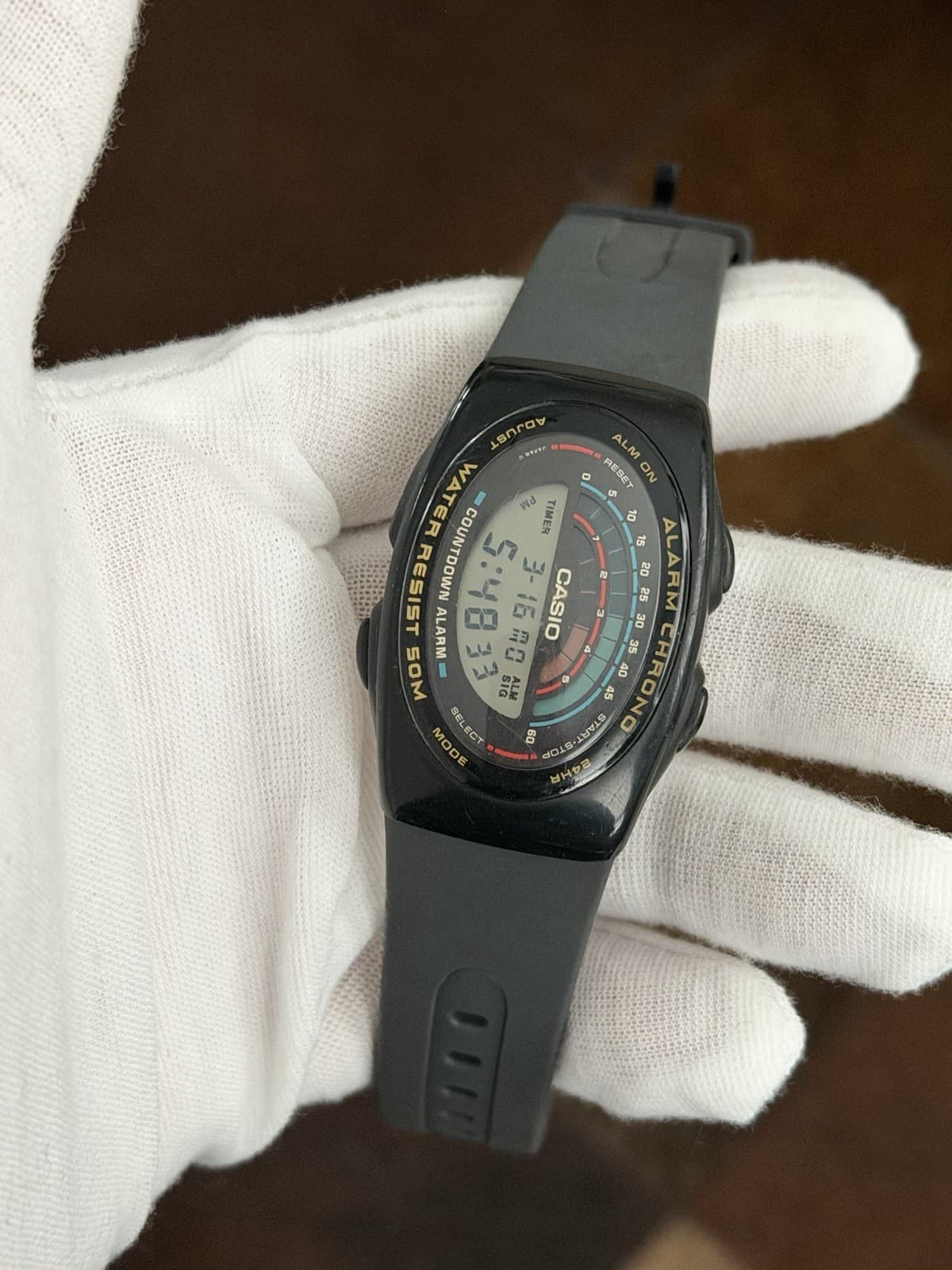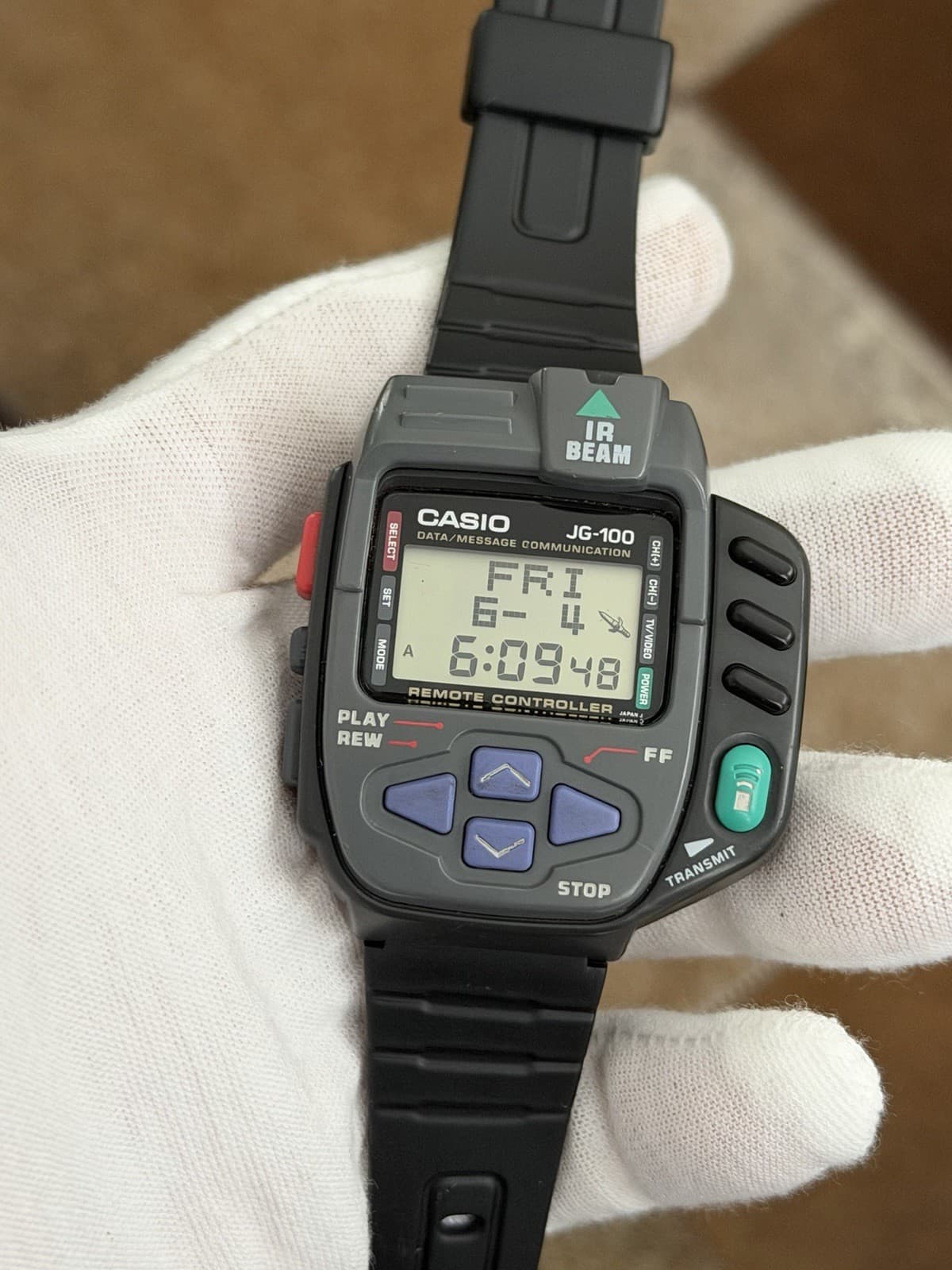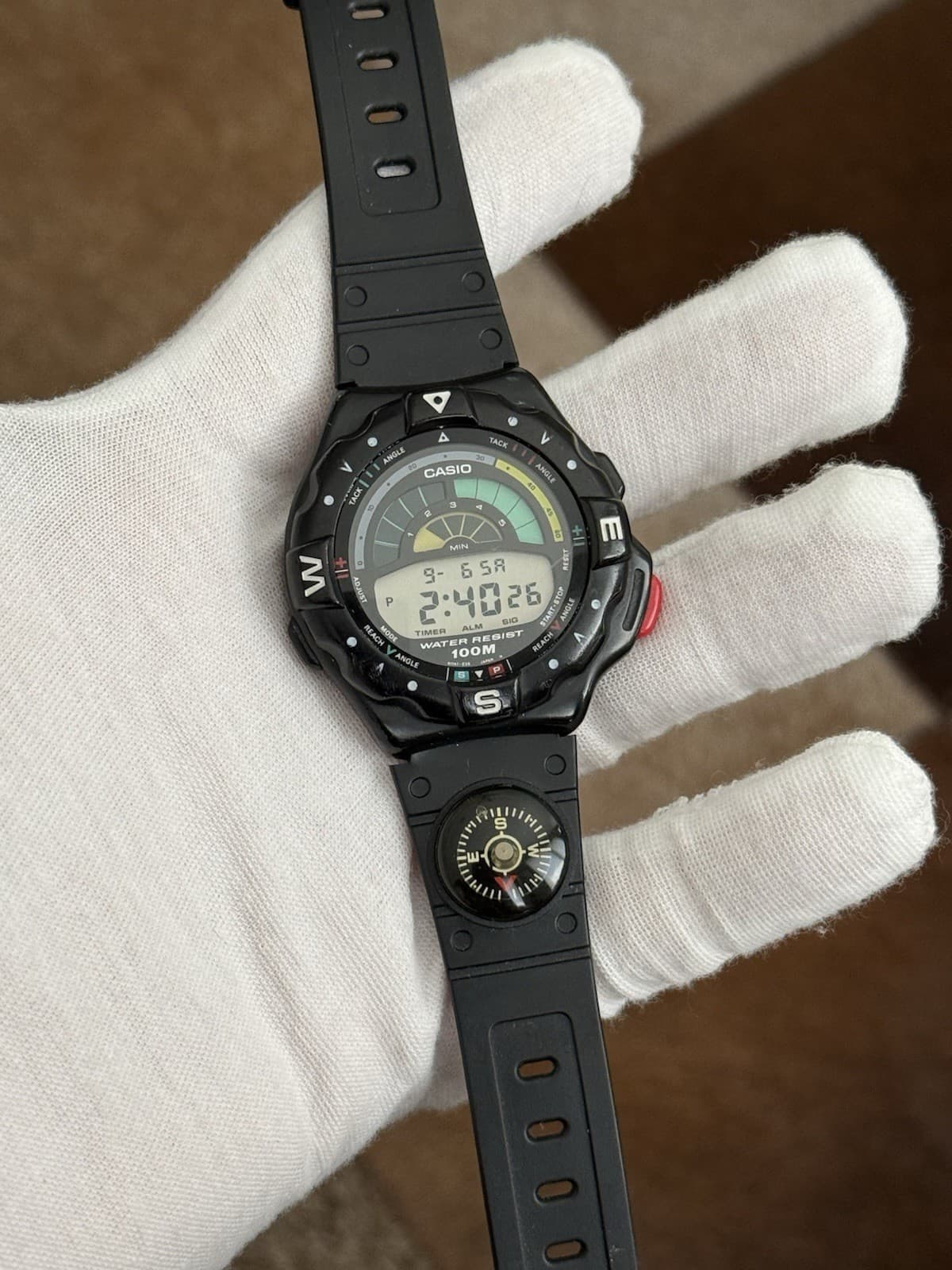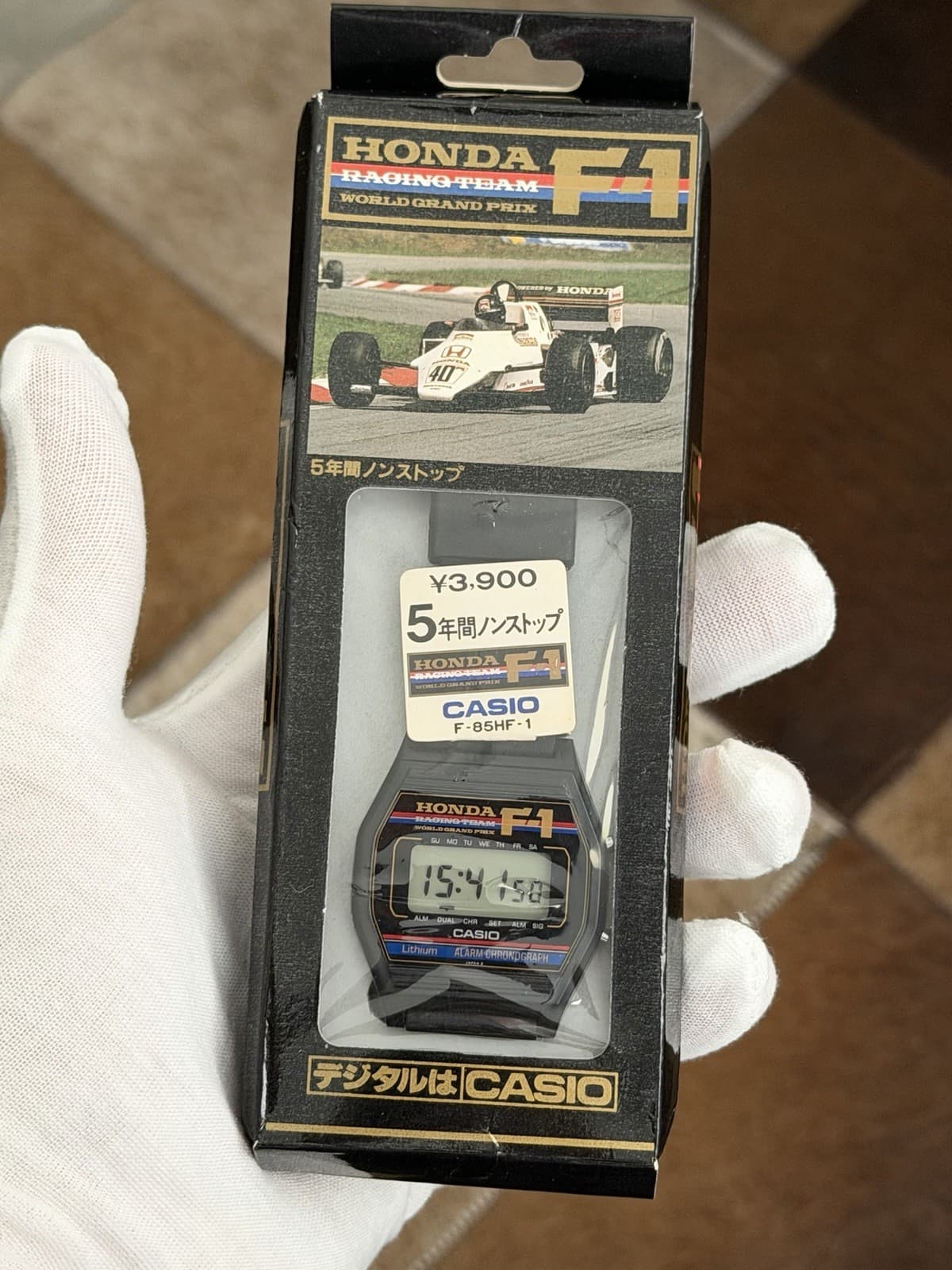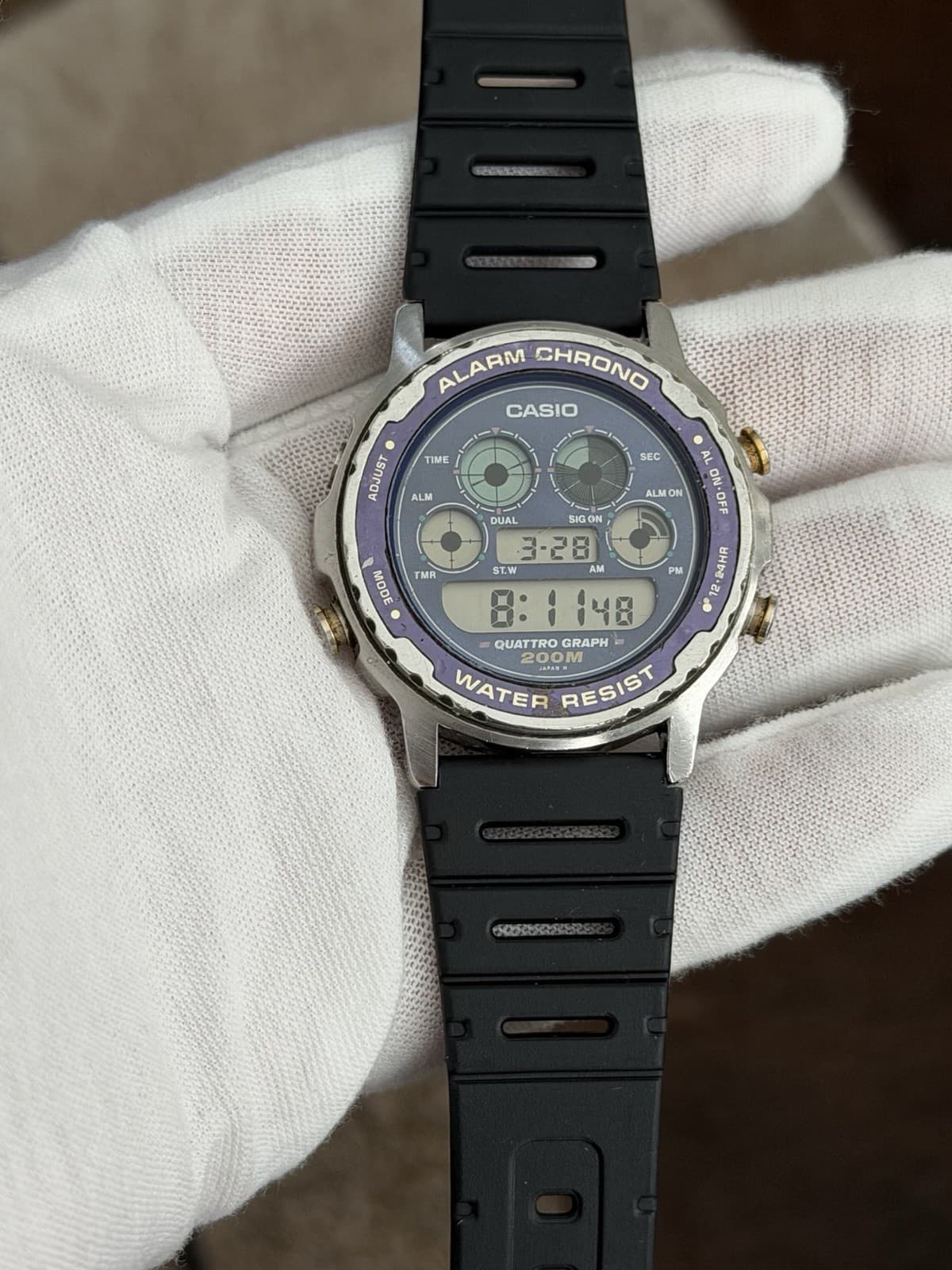
Rare Vintage Casio DW-7300 Quattro Graph Men’s Digital Sports Watch JDM 1980s
DESCRIPTION
► ARCHIVE FILE: CASIO — BRAND HISTORY
Casio began not with watches but with calculation. Tadao Kashio founded Kashio Seisakujo in Tokyo in 1946, and with his three brothers developed the 14-A in 1957, the world's first compact all-electric relay calculator, incorporating the business as Casio Computer Co. that same year. The move into watchmaking came in November 1974 with the Casiotron, a digital watch whose claim to fame was an automatic calendar that knew how many days each month had, a small feat of logic that announced how an electronics firm would approach timekeeping.
Casio's landmark is the G-Shock. Engineer Kikuo Ibe, after breaking a treasured watch given to him by his father, set out to build one that could not break, chasing a triple-10 target: survive a 10-meter drop, resist water to 10 bar, and run 10 years on a battery. After roughly 200 prototypes, the insight that a module floating within a hollow structure could absorb shock, inspired by watching a rubber ball bounce, produced the DW-5000C in April 1983. Its square case and protective philosophy still define the line today.
Around it grew a catalog of quietly important watches. The F-91W of 1989, a featherweight resin digital with alarm, stopwatch, and a battery that runs for years, became one of the best-selling watches ever made and remains in production essentially unchanged. The Databank series from 1984 put a phone directory on the wrist, calculator watches like the CA-50 turned up in Hollywood films, and the A158 and A168 on steel bracelets carried the same plain-spoken design language to dressier wrists.
Vintage Casio collecting rewards attention to module numbers, the small code on the case back that identifies the electronics inside. Early screw-back G-Shocks such as the DW-5000C and DW-5600C command real money, original Casiotrons are genuinely scarce, and clean examples of 1980s models with intact resin and bright displays get harder to find every year, since polymer cases age in a way steel does not. It is one of the few corners of collecting where the landmark pieces remain affordable.