◄ RETURN TO CATALOGCART
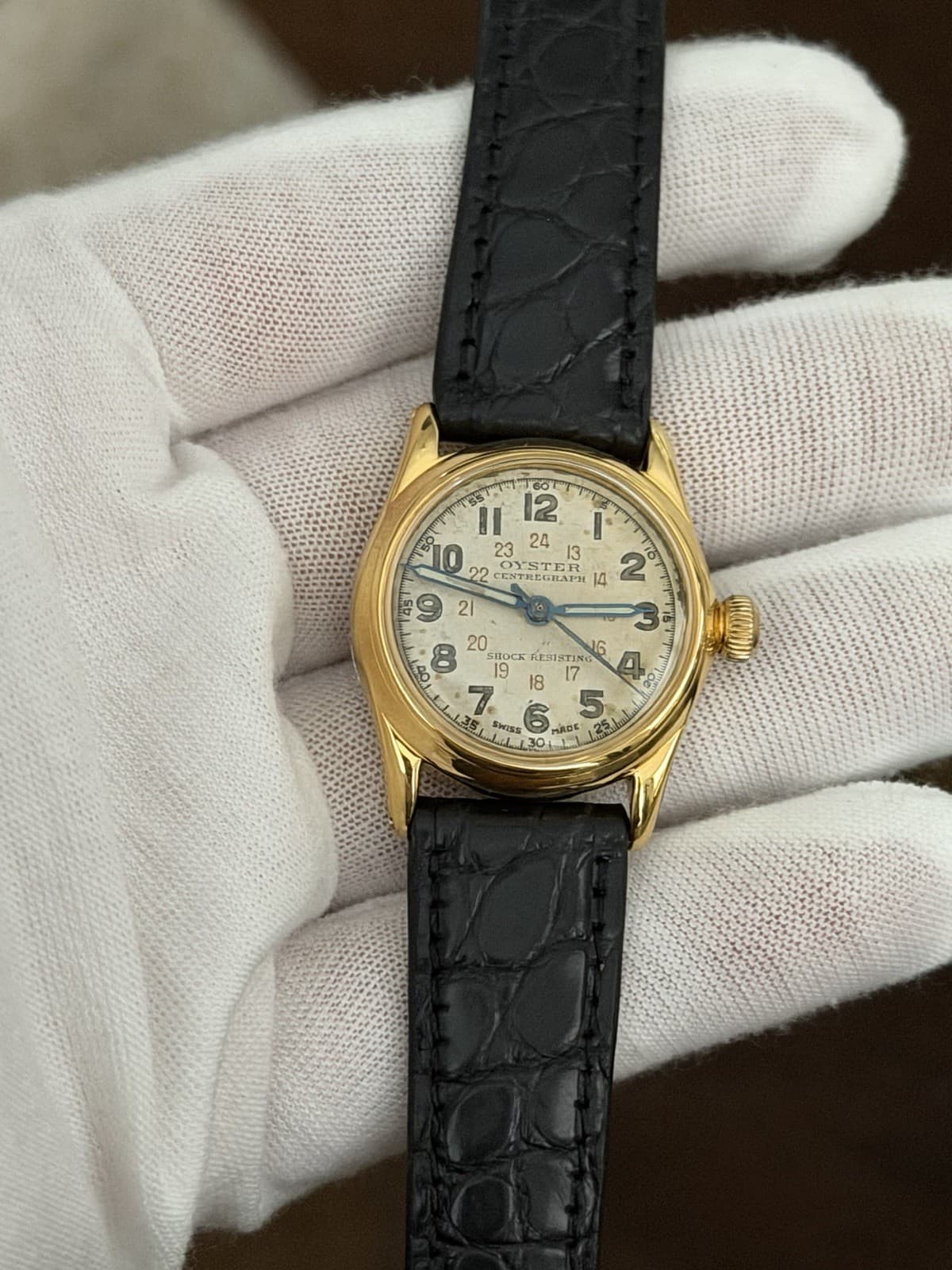
Vintage Rolex Wellington Observatory WW2 Men’s Military Watch - Image 1
1 / 9

Vintage Rolex Wellington Observatory WW2 Men’s Military Watch

DIRECT PRICE SAVE 10%
EBAY PRICE$2799.00
DIRECT -10%$2519.10

DESCRIPTION

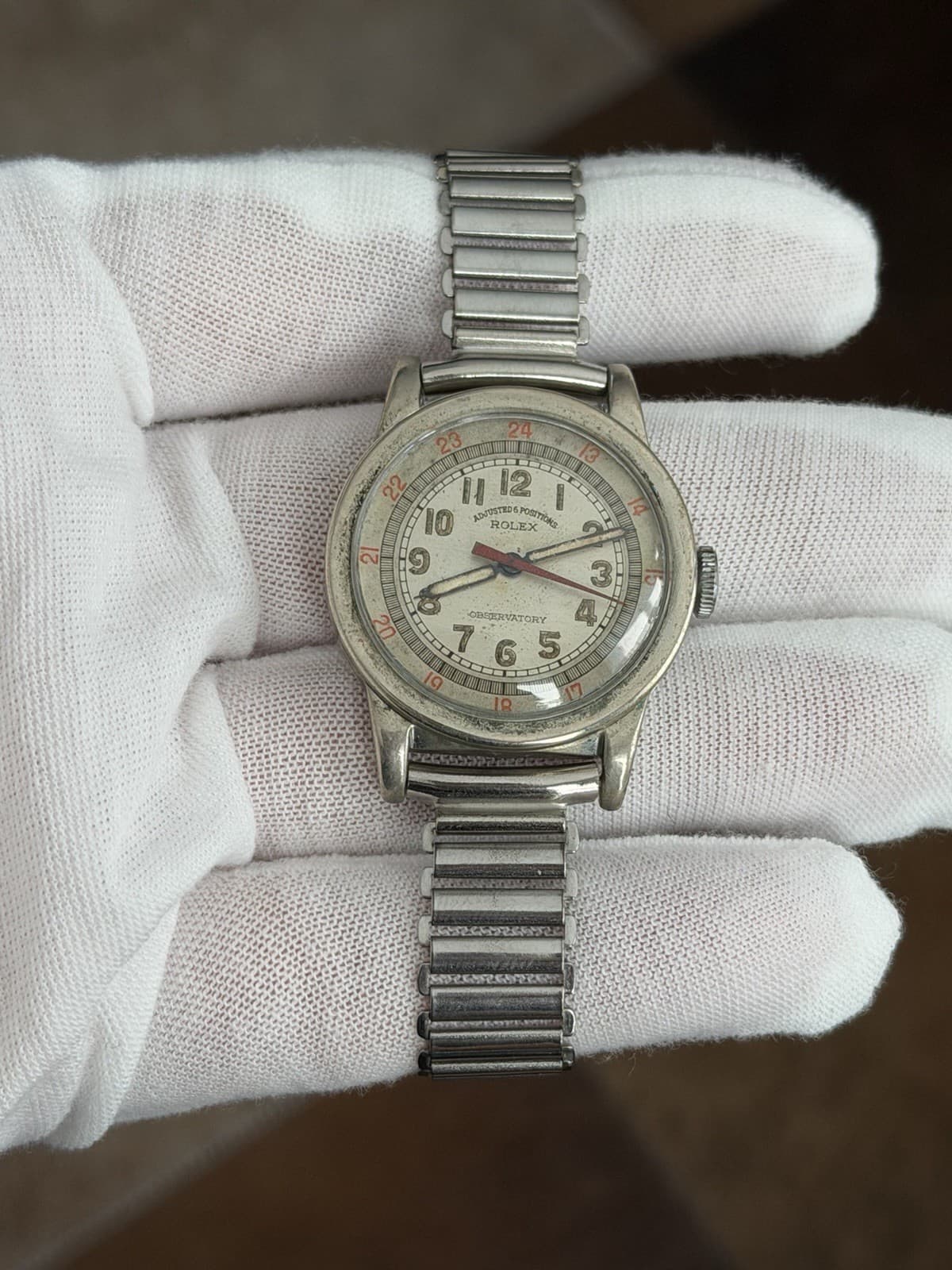
Up for sale is a vintage Rolex Wellington Observatory men’s wristwatch produced during the World War II era. Watches from this period reflect a fascinating chapter in Rolex history when wartime conditions led the company to utilize a variety of case makers and configurations, resulting in subtle differences between otherwise similar models. This example features a classic military-style dial with bold Arabic numerals, an outer minute track, and a red 24-hour inner track. The dial is signed “Rolex” and “Observatory” and has a clean time-only layout without a sub-seconds register, giving it a purposeful and highly legible appearance. The case was produced by Keystone, a known supplier of cases to Rolex during this period. The inside of the caseback is stamped “Keystone” and “Base Metal,” consistent with original examples from the era. The case measures approximately 30 mm excluding the crown and is constructed of nickel. The exterior caseback carries a personalized engraving reading “J.B. Beatty.” Powering the watch is its original Rolex manual wind movement, which is currently running and holding accurate time. The movement is Rolex signed and consistent with wartime production. The watch is fitted on a NOS era-correct Bonklip-style stainless steel bracelet that suits the military character of the piece. The crown appears to have been replaced at some point during the watch’s lifetime. The watch is in good physical condition for its age and shows signs of use and age consistent with a worn vintage timepiece. The dial displays natural aging acquired over decades of use. The photos best describe its physical condition and should be reviewed carefully. Key Details • Brand: Rolex • Model: Wellington Observatory • Era: 1940s (World War II Era) • Movement: Original Rolex Manual Wind Movement • Case Maker: Keystone • Case Material: Nickel (Base Metal Caseback) • Case Size: Approximately 30 mm (excluding crown) • Dial: Rolex Observatory Dial with Arabic Numerals and Red 24-Hour Track • Bracelet: NOS Bonklip-Style Stainless Steel Bracelet • Notes: Personalized “J.B. Beatty” Caseback Engraving; Crown Believed to Have Been Replaced • Condition: Running and Holding Accurate Time A highly collectible Rolex Wellington Observatory from the WWII era, offering strong originality, classic military styling, and a fascinating connection to an important period in Rolex history. Ships carefully. Feel free to message me with any questions.
BRAND:
Rolex
UNIT CONDITION:
Pre-owned - Good
► BUY ON EBAY
► BUY DIRECT & SAVE 10%
$2799.00$2519.10
► ARCHIVE FILE: ROLEX — BRAND HISTORY

Rolex began in London in 1905, when Hans Wilsdorf and his brother-in-law Alfred Davis founded Wilsdorf & Davis to case Swiss movements for the British market. Wilsdorf registered the Rolex name in 1908, choosing it because it was short, easy to pronounce in any language, and fit neatly on a dial. He then set about proving that wristwatches, still dismissed as jewelry, could be precision instruments: a Rolex earned the first chronometer certificate granted to a wristwatch in 1910, a Kew Class A certificate followed in 1914, and the firm moved to Geneva in 1919.

Two inventions made the modern sports watch possible. The Oyster case of 1926 sealed the movement behind a screw-down bezel, case back, and crown; Wilsdorf proved it in 1927 by having swimmer Mercedes Gleitze wear one for more than ten hours in the English Channel, then announced the result in a front-page newspaper advertisement. In 1931 came the Perpetual rotor, a self-winding weight swinging through a full 360 degrees that kept the watch wound and the crown safely screwed down. Those two ideas remain the backbone of the catalog a century later.

The postwar decades produced the references that define the tool watch: the Datejust in 1945, the Explorer and the Submariner in 1953, the GMT-Master in 1955 for Pan Am crews, the Day-Date in 1956, and the Cosmograph Daytona in 1963. None of these were luxury objects at launch; they were equipment for divers, pilots, and engineers, which is precisely why the early examples matter. Rolex changed details constantly, so dial printing, bezel inserts, and crown guards let specialists date a watch almost to the year.

Vintage Rolex is the most scrutinized corner of the watch market, and originality is everything: an untouched dial outweighs a polished case, and correct period parts outweigh cosmetic perfection. Gilt-dial sports models and early GMTs sit at the top, but honest Oyster Perpetuals, Air-Kings, and Datejusts from the 1950s through the 1970s remain attainable ways into the brand. Serial numbers date production, service history adds real value, and the deep base of parts and knowledge around these watches means a good example can be maintained indefinitely.
► RELATED TIMEPIECES DETECTED (4)

RECOMMENDATIONS BASED ON BRAND AND MOVEMENT ANALYSIS